
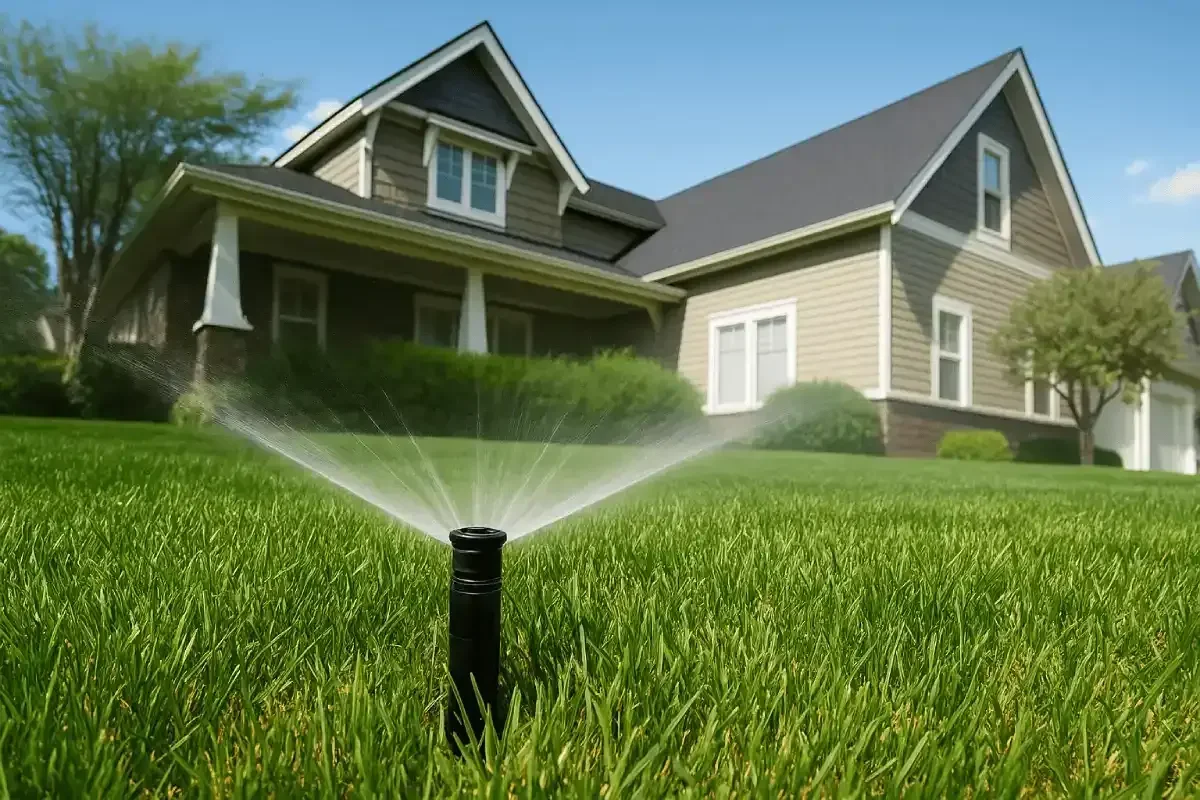
Central Illinois summers don't build slowly. They just show up. Once temperatures push past 90°F and the rain stops showing up on schedule, an irrigation system that was running fine in May can fall behind fast. A cracked head, a stuck valve, or a controller that's still set to spring timing, and suddenly you've got brown patches before you've even noticed a problem.
Clay Soil changes the math
Our region's heavy clay holds water at the surface longer, then sheds it fast once it's saturated. Short, frequent watering just wets the top inch and trains roots to stay shallow, which makes them more vulnerable to drought. Lawns and beds hold up better with deep, infrequent watering: 2 to 3 times a week, early in the morning, so water has time to soak down before the heat sets in.
A Few signs it's worth a service call:
If parts of the lawn look lush while others are dull or browning, that's usually a clogged or misaligned head, not just a dry patch. Pooling water near a zone points to a broken line or valve. And if the system is still running on a spring schedule, it's probably either wasting water overnight or shortchanging the lawn during the hottest stretch of the day.
Catching it now pays off.
A mid-summer inspection costs a lot less than replacing drought-stressed sod or a mature planting bed later on. It's also the difference between a lawn that coasts through August and one that needs a full recovery plan by fall. Green View has been reading Central Illinois soil, weather, and lawns since 1955. If it's been a while since anyone looked at your system, our irrigation service and repair team can check zones, adjust the timing for summer, and catch the small stuff before it turns into something expensive.
Want to keep your property beautiful? We are happy to help.
Schedule a Free ConsultationGreen View proudly serves Peoria, Bloomington, Springfield, Champaign, Decatur and surrounding Central Illinois communities.